
The Grifter Conversation Nobody Wants to Have
It’s because the system that calls those people grifters has already failed them.


Every few months the internet picks somebody.
A wellness influencer. A framework builder. A healer with a following and a fee. And the pile-on begins. Credentials get checked. Studies get cited. The word “grifter” gets deployed like a scalpel.
And I’ve been watching it. Quietly. From the wall.
Because I know how this rodeo works.
Here’s what nobody is saying out loud.
The reason people are desperate enough to find Joe Dispenza, the carnivore doctor, the plant medicine healer, or the color therapist, is not because they’re stupid. It’s because the system that calls those people grifters has already failed them. Sent them home with a pamphlet. Told them their labs look fine. Gave them ten minutes and a prescription that didn’t work.
And charged them for the privilege.
So before we talk about who is a grifter, can we talk about who made people desperate enough to look?

The knowledge was legitimate enough to steal.
Pharmaceutical companies go down to the Amazon. They follow the medicine men and women. They study centuries of indigenous healing, oral traditions passed down for millennia, and plant medicine that kept entire populations alive without a single randomized controlled trial and they extract what they need. Compound it. Patent it. And charge exorbitant amounts of money for it.
The knowledge was legitimate enough to steal.
It’s not legitimate enough to credit.
I want you to sit with that.
This is not a conspiracy theory. That is documented colonial medicine. Running continuously. This includes the Amazon, Papua New Guinea, and the Aboriginal peoples of Australia. People who knew how to heal themselves, who had been healing themselves for thousands of years, whose knowledge gets harvested the moment it becomes profitable and dismissed the moment it challenges the institution.
And we want to call the person with a framework and a fee a grifter?
I’m just saying.
The placebo effect is real. Nobody is funding it.
Here is a scientific fact that the grifter conversation conveniently ignores.
The placebo effect is documented. Peer reviewed. Measurable. There are people who take sugar pills and get the same clinical outcomes as people who take the actual medication. Their pain reduces. Their symptoms improve. Their bodies heal.
Science cannot fully explain it.
And there is almost no money funding the study of it.
You know why? Because you cannot patent a belief. You cannot charge exorbitant amounts for a nervous system that finally feels safe enough to stop fighting itself. There is no profit in studying what happens when a person is finally seen, finally heard, finally given a framework that makes their suffering make sense.
So we don’t study it. We call it anecdotal. We call it pseudoscience.
And then we call the people who accidentally discovered how to activate it grifters.

The HRT story. Because we need to say it.
I work in the menopause space. So let me use this example because it is personal to me and to every woman I treat.
For a decade, women were kept off hormone therapy because of a black box warning that came out of a study that was later found to have serious methodological problems. Women suffered. Their quality of life deteriorated. Their symptoms went untreated. And when they found other ways to manage, some conventional, some not, the establishment that created the problem had the audacity to judge their choices.
Then the same establishment reversed its position.
So who was the grifter in that story? Who paid while the science was catching up? And where was the accountability for the decade of harm caused by the people with the credentials?
I am not anti-science. I use the trials to guide how I practice medicine for the specific person in front of me.
Don’t ask me to follow the science blindly and never question it because sometimes questioning it is the only thing that leads us to a better answer. And the people who questioned it, who said there has to be another way, I wouldn’t consider grifters because some of them actually believe they are right.
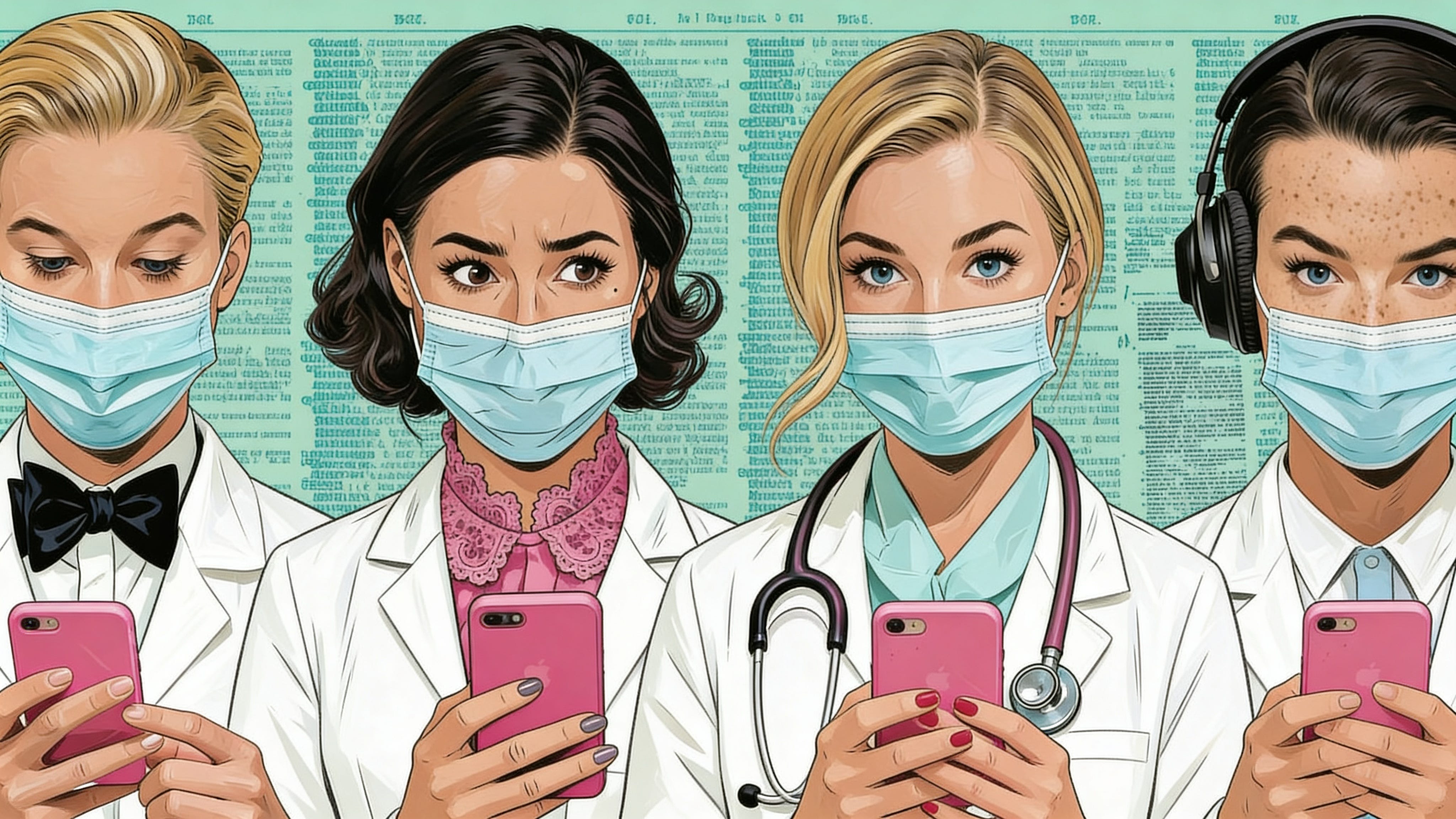
Social Media is like Mean Girls, but with a bibliography.
I joined Substack recently, and I am watching something happen in real time.
There is a sophisticated, well-cited, elegantly written tradition of taking people down on this platform. The sentences are longer than Instagram. The credentials are more visible. The footnotes are real.
But the move is the same across platforms.
Pick a target. Establish your authority. Define them out of legitimacy. Build your audience on their removal.
I see this in wellness spaces. I see it in trauma spaces. I see it in menopause spaces, too, where medical influencers drag other medical influencers under the banner of “evidence,” while the public watches the spectacle and mistakes dominance for education.
That is the part that concerns me.
Critique is necessary. Medicine needs critique. Wellness needs critique. Trauma frameworks need critique. Menopause content absolutely needs critique because women are being sold fear, certainty, supplements, hormones, half-truths, and salvation narratives every day.
But critique and elimination are not the same thing.
Critical thinking asks: What is useful here? What is incomplete? What is unsupported? What is culturally limited? What needs context? What should be discarded? What harm could this cause? What harm did the existing system already cause that made people search here in the first place?
Dominance culture asks one question:
Who is allowed to stay legitimate?
That is the part I keep watching.
Where I draw the line.
I draw it at consent.
Children cannot consent. Mentally incapacitated adults cannot consent. Those populations need protection and I will always say so without hesitation.
Every other adult is a grown human being who gets to decide how they heal. Full stop.
If they have access to multiple perspectives, to other experts, to the internet, to AI, to second opinions, and they still choose a path the establishment would not choose for them, that is their sovereign right. And if they did not get the outcome they hoped for, that grief is theirs. Not to me. Not to a Substack writer with a bibliography.
A family member recently died from cancer. They chose treatments that had not been proven. They wanted to live and took a path that felt like hope to them.
Was the oncologist a grifter for not being able to save them?
Was I wrong for not stopping them?
Or were they just doing the best they could with the body and the time they had left?
I know what my answer is.

The real question.
We are spending enormous intellectual energy policing who counts as a legitimate healer while the system that failed the people seeking those healers continues unchallenged.
Insurance companies deny care to protect their profits every single day. That is a grift. The companies have a board of directors and a lobbying budget.
The DSM gets written by committees with pharmaceutical industry ties. Developmental Trauma Disorder gets rejected not because the data was absent, Van der Kolk brought 20,000 cases, but because it threatened existing diagnostic and treatment categories that generate revenue. That is a grift. With peer review.
Residents are still being trained in beliefs about Black pain that are not supported by science. That is a grift. With a white coat.
Serena Williams had to fight to be believed in her own delivery room. That is a grift. With a medical degree.
So when someone asks me why people turn to the person with the ring light and the framework and the fee, my answer is this.
The person with the credential, the corner office, and the fifteen-minute appointment slot had already told her she was fine and sent her home.
And she was not fine.
She was just not believed.
I am not here to fight anybody. There is enough in this world for everyone to eat.
I am here to say what I see. I want to practice medicine in a way that aligns with my training, my conscience, and my patients’ needs. I build frameworks that help women whose nervous systems have carried invisible loads for decades finally understand what is happening in their bodies.
I charge for that work. Because healing is worth paying for. Because my time, my training, and my presence have value. Because a broken system is not a reason to give my life’s work away for free.
And I do not need a Substack writer to give me permission to exist in this space.
What I do speaks volumes.
The people I touch will feel that effect.
Dr. Stacey Denise Moore is a board-certified surgeon and lifestyle medicine physician practicing in TX, CA, GA, KY, MD, OH, and VA. She is the founder of The Neuroaesthetic MD and the creator of the Neuroaesthetic Reset Method. This piece is educational commentary and does not constitute medical advice.