
We Keep Calling Menopause a Second Adolescence. That's the Problem.
That’s not a second adolescence. That’s something we don’t have a word for yet.


I keep hearing it. In the research. From my colleagues. In the media. Menopause described as the second adolescence.
And I get why the framing is appealing. It reaches for something that feels true — transformation, reorganization, the self shifting into something new. But I’ve been sitting with this term for a while now, watching how it moves through the conversation, and something keeps nagging at me.
So let’s go back to the actual definition.
Adolescence — from the Latin
adolescere, meaning to mature — is the transitional stage of human physical and psychological development from puberty to adulthood. The World Health Organization defines its occurrence between ages 10 to 19. It is the first construction of the self. The movement from dependence to independence. From incomplete development to full personhood.
That’s not what’s happening for the menopause transition coalition.
The “second adolescence” is a misnomer, a placeholder borrowed from a field that hasn’t done the deep work of defining what this transition actually is. We don’t have the right word yet. And that absence isn’t just a failure of semantics, it trivializes the menopause experience and sheds light on the paucity of progression on a process that’s been with us since we’ve been here. Because the framework used to describe a process determines who gets help and who gets left out.

A recent piece from The Biological Imagination, “Menopause: The Second Adolescence”, which is absolutely worth reading, builds a compelling case for menopause as a “second neurological adolescence. The author draws on Lisa Mosconi’s neuroimaging research, the grandmother hypothesis, and the orca metaphor to argue that the menopausal transition is a second neurological adolescence. A period of active brain remodeling. And that brain reconstruction is not a decline.
The author describes a woman at 49 who doesn’t recognize herself. The ground moving. The self she built across five decades becoming temporarily unreliable. And she uses Georgia O’Keeffe and Toni Morrison as examples of what arrives on the other side of that transition — clarity, radical creative work, the signal finally coming through clean.
I don’t disagree with any of the points laid bare.
But here’s what I keep thinking about as a fly on the wall.
Georgia O’Keeffe didn’t go back to childhood to paint her most iconic work in the New Mexico desert. Toni Morrison didn’t return to adolescence to write Beloved at 56 or win the Nobel Prize at 62. Nikki Giovanni, who published her first collection at 25 and won the Ruth Lilly Poetry Prize at 79, didn’t become more herself by becoming a teenager and more youthful again. Grandma Moses picked up a paintbrush in her late 70s and produced work that still hangs in museums. Maya Angelou’s voice deepened every decade until her death at 86. Nina Simone’s later recordings are the ones people reach for now.
None of these women went backward to get there. They arrived embodied as fully formed, fierce mature WOMEN, carrying everything they had already lived, to the other side of a transition that demanded everything from them. Not as adolescent girls reversing biologically, but as women already there.
That’s not a second adolescence. That’s something we don’t have a word for yet.

And if you still think going backward sounds poetic, let me remind you of Benjamin Button.
The Curious Case of Benjamin Button tells the story of a man born old who ages in reverse — from a decrepit elder to a babbling infant. People loved that film. It was beautiful. Brad Pitt. Cate Blanchett. Taraji P. Henson. Gorgeous cinematography. And underneath all of that beauty was one of the most quietly devastating stories ever put on screen.
Because here’s what actually happened to Benjamin Button: his body went backward but his mind kept moving forward. He was permanently out of sync with everyone who loved him. The people who knew him as a grown man watched him become a stranger. The woman who loved him had to watch him disappear into a child she couldn’t reach. He died as a baby in her arms. That’s not a second chance. That’s a tragedy dressed up as a curiosity.
Going backward costs you everything.
It costs you your agency. It costs you your relationships. It costs you your ability to be known as who you actually are. A 12-year-old girl going through puberty doesn’t know how to find a doctor. She doesn’t have financial resources. She can’t build a support system or research her own options or advocate for herself in a medical system that wasn’t built for her. She depends on someone else to do all of that.
That is not who we are at 48. At 52. At 57.
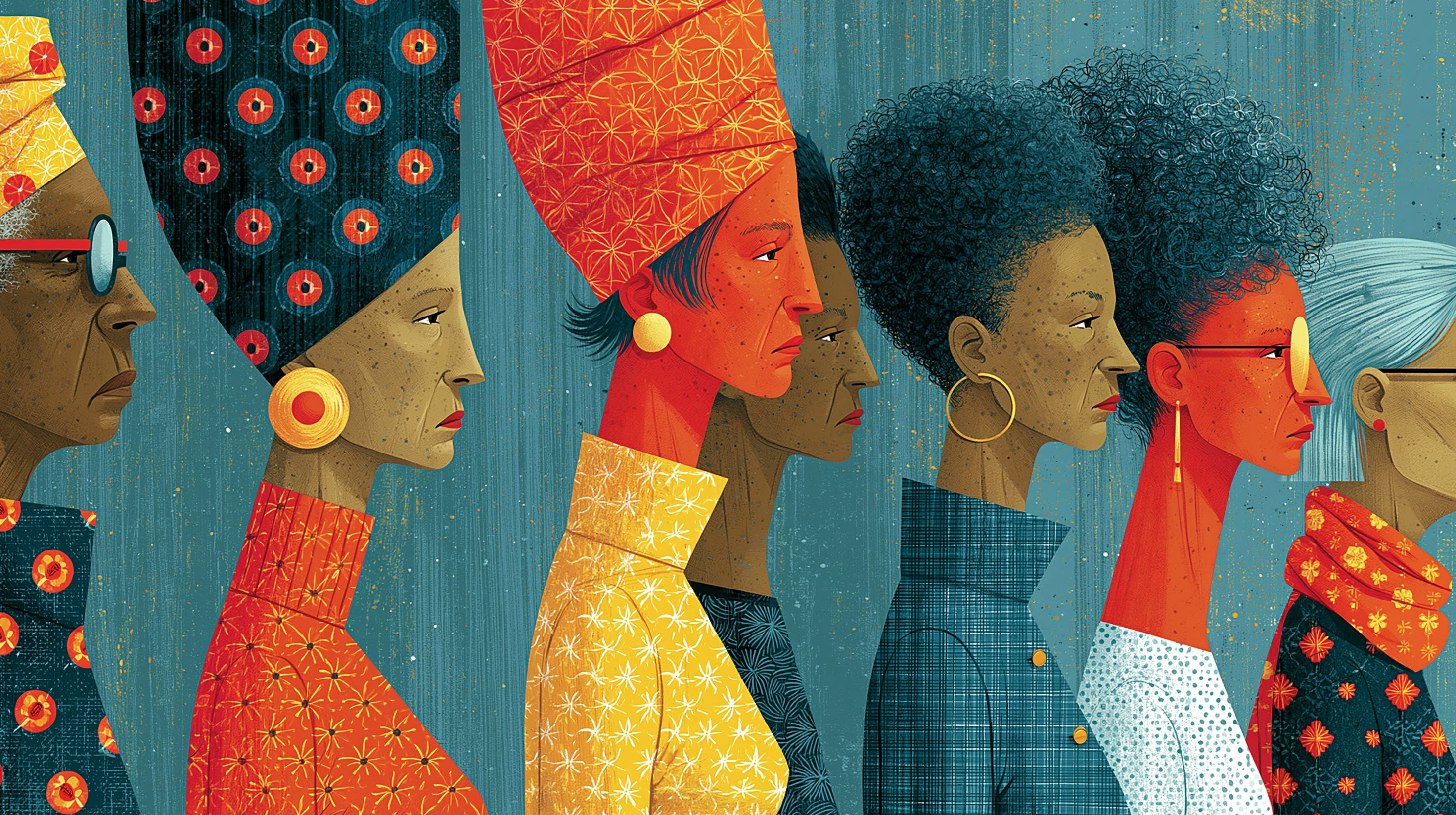
We are women who have built careers, raised children, buried parents, navigated systems designed to exclude us, and showed up anyway. We don’t need our senses redirected toward bonding and reproduction and the energetic demands of building a family from scratch. We have already done that. Or we chose not to. Either way — we are not at the beginning of the story. We are deep in the middle of it, moving toward something the current language doesn’t have the range to describe.
The menopause transition is not a reversal. It is not a return. It is the final act of a story that took a lifetime to write — and it deserves a word that honors that, not one borrowed from the opening chapter.
We haven’t built that word yet. That’s on us. That’s on the field. That’s on every researcher who looked at this transition and reached backward instead of doing the harder work of sitting with what it is until the right language arrived.
If you read The Biological Imagination’s piece on menopause as a second adolescence, read it. It is thoughtful and worth your time. But I want to push the conversation further. Menopause is not a return to adolescence. It is not reverse puberty. It is a transition into a later form of power we still have not properly named. And until we build better language, I’ll borrow from the great words of Kamala Harris, “we are not going back.”
Dr. Stacey Denise is a board-certified surgeon transitioned into lifestyle medicine specializing in the menopause transition. She writes at The Neuroaesthetic MD™. She sees patients in California, Georgia, Kentucky, Maryland, Ohio, Texas, and Virginia.
If you want the next layer of my argument, read “What If Menopause Is an Energy Crisis?”. Because if The Nervous System Eats First, menopause can’t be understood through hormones alone.