
When "It's Just Your Hormones" Becomes Harmful
Medicine does not have a knowledge problem about women's pain. It has a belief problem.

I want to tell you something I don’t usually lead with in clinical spaces.
I have been on both sides of that exam table.
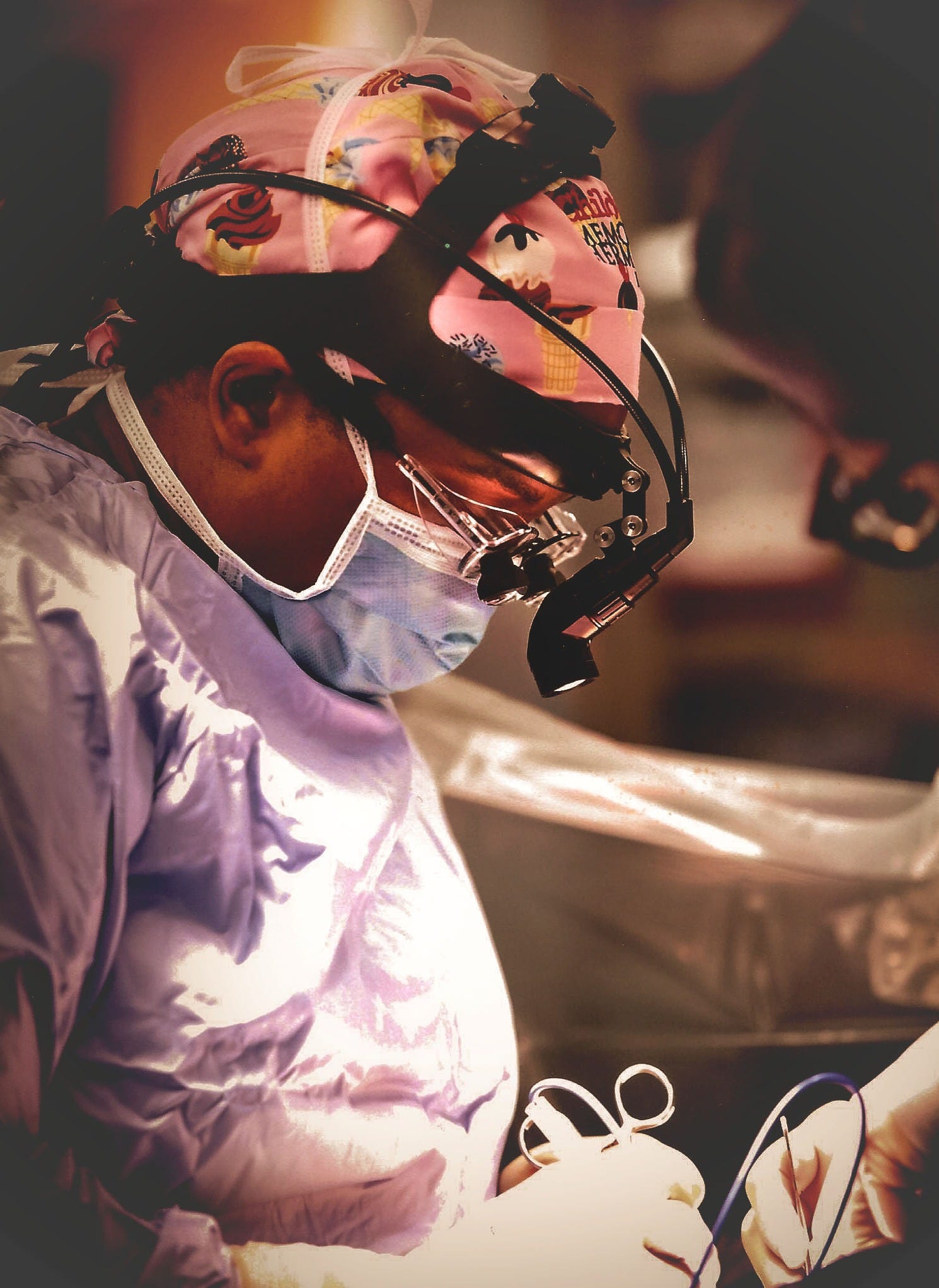
I trained as a surgeon. I came up inside an institution where the standard of care was built on data that mostly excluded women and nearly entirely excluded Black women. I learned to work inside that system. I also sat in that system as a patient — in my own perimenopausal transition — and heard versions of the same thing women tell me they hear every day.
Your labs look normal. It might be stress. Have you tried reducing your workload?
I speak medicine fluently. I know how to ask the right questions. I know what tests to request and why. I know how to push back without being labeled difficult. And I was still dismissed.
So when I say the hormone-only menopause narrative is leaving Black women behind — I’m not saying it from a position of academic distance. I’m saying it from inside the body it leaves behind.
The Story That Sounds Like Empowerment
Spend ten minutes in the menopause content space and you’ll hear some version of the same thing: everything’s your hormones, balance them and everything falls into place, here’s the protocol, here’s the pellet, here’s the supplement stack that will give you your life back.
There are grains of truth in this. Hormone changes in perimenopause are real. Many clinicians were never adequately trained in menopause care. Women’s symptoms have been minimized for decades — and the push to change that has done real good.
But here’s what happens when hormones become the only answer.
A woman tries the protocol. It doesn’t fully work. And because the story only has one variable — hormones — the failure has nowhere to go except back onto her. She didn’t do it right. She’s not committed enough. She must be too stressed.
I want to name that for what it is. That’s not a clinical assessment. That’s shame wearing a wellness label.
And for Black and brown women, that shame lands on top of something much older and much heavier than a failed supplement protocol.
What I Learned Training in Medicine as a Black Woman
Medicine does not have a knowledge problem about women’s pain. It has a belief problem.
I came across an article in PubMed, a University of Virginia study found that half of white medical students and residents endorsed false biological beliefs about Black patients — including that Black people’s nerve endings are less sensitive and their skin is thicker — and those who held these beliefs rated Black patients’ pain lower and made less accurate treatment recommendations. Published in the Proceedings of the National Academy of Sciences. (DOI: 10.1073/pnas.1516047113)
I want you to sit with that for a moment. Half of people in medical training. Believing that a Black woman feels less pain because of the color of her skin.
Think about what that means neurobiologically. The same pain pathways. The same signal traveling from the peripheral nervous system to the thalamus to the cortex. The same neuroanatomy in every human body regardless of race. There is no biological mechanism that makes pain less real in a Black body. None. This is not science. This is mythology that got laundered into medical education — and it was never fully corrected.
Serena Williams had to fight to be believed about her blood clots after childbirth. She demanded the CT scan that saved her own life. She is one of the greatest athletes who has ever lived and the system still almost let her die because someone did not take her symptoms seriously.
That is not an anomaly. That is a pattern. And when that pattern runs underneath a medical conversation about hormones — when a Black woman comes in with a list of symptoms and gets told her labs are normal and it’s probably stress — she is not experiencing a bad appointment. She is experiencing a system.
The Body That Arrives at Menopause
This is what I keep coming back to. Black women don’t arrive at perimenopause as blank slates.
Dr. Arline Geronimus introduced the weathering hypothesis in 1992 — the idea that Black women’s health deteriorates earlier than white women’s not because of genetics but because of the cumulative biological cost of living in a racist society. The wear and tear is measurable. It shows up in allostatic load scores, in inflammatory markers, in cortisol patterns, in telomere length.
Based on articles retrieved from PubMed, Geronimus and colleagues found that Black women had higher allostatic load scores than white women at every age studied — particularly between 35 and 64 — and that these differences were not explained by poverty. Even non-poor Black women carried the highest biological wear scores. (DOI: 10.2105/AJPH.2004.060749)
By the time a Black woman reaches her late forties, her body has already been running a different program than the one most clinical trials were designed for. Her cortisol has been elevated longer. Her nervous system has been operating at a lower-grade threat level for longer. The hormonal buffer that was quietly managing some of that load starts to shift — and now everything that was being held underneath the surface starts to surface.
The hormone protocol wasn’t built for that body. It was built for a body that arrived at menopause carrying a different history.
And the SWAN study — the most important longitudinal study of menopause across racial groups — confirmed it in the data. Based on articles retrieved from PubMed, hormone therapy was associated with higher quality of life in white women but lower quality of life in Black women on the same therapy. (DOI: 10.1097/GME.0000000000002087)
The same intervention. Different outcomes by race.
The science confirmed what Black women’s bodies already knew and were not being believed about.
What I Do Instead — and Why
I prescribe hormone therapy when it’s appropriate. That’s still part of the picture.
But I start somewhere different. I start with the nervous system, the gut, and the stress patterns — the three pillars that determine whether any other intervention has somewhere to land.
Because here is what I’ve learned both as a clinician and as a Black woman who went through this transition inside a system that wasn’t built for her: if your nervous system has been running a threat response for twenty years, adding hormones is like painting a house with a crumbling foundation. The paint might look fine. The structure is still compromised underneath.
Sleep, the nervous system, and the gut are not separate departments. They run together. They always have. And for Black women carrying decades of allostatic load into perimenopause — addressing only the ovarian hormone piece and calling it menopause care is not care. It is management.
You deserve more than managed.
Dr. Stacey Denise is a board-certified surgeon transitioned into lifestyle medicine specializing in the menopause transition. She is completing her trauma certification through the Trauma Research Foundation. She sees patients in California, Georgia, Kentucky, Maryland, Ohio, Texas, and Virginia.
If you want to understand how your nervous system is responding to this transition, start with the free Color Archetype Quiz at drstaceydenise.com.
Sources
Hoffman KM et al. Racial bias in pain assessment and treatment recommendations, and false beliefs about biological differences between blacks and whites. Proceedings of the National Academy of Sciences. 2016. DOI: 10.1073/pnas.1516047113
Geronimus AT et al. “Weathering” and age patterns of allostatic load scores among Blacks and Whites in the United States. American Journal of Public Health. 2006. DOI: 10.2105/AJPH.2004.060749
El Khoudary SR et al. The menopause transition and women’s health at midlife: a progress report from SWAN. Menopause. 2019. DOI: 10.1097/GME.0000000000001424
Christmas M et al. Menopause hormone therapy, quality of life, and racial/ethnic differences: SWAN. Menopause. 2022. DOI: 10.1097/GME.0000000000002087